How Does Malaysia Verify Ages for Its Under-16 Social Media Ban?
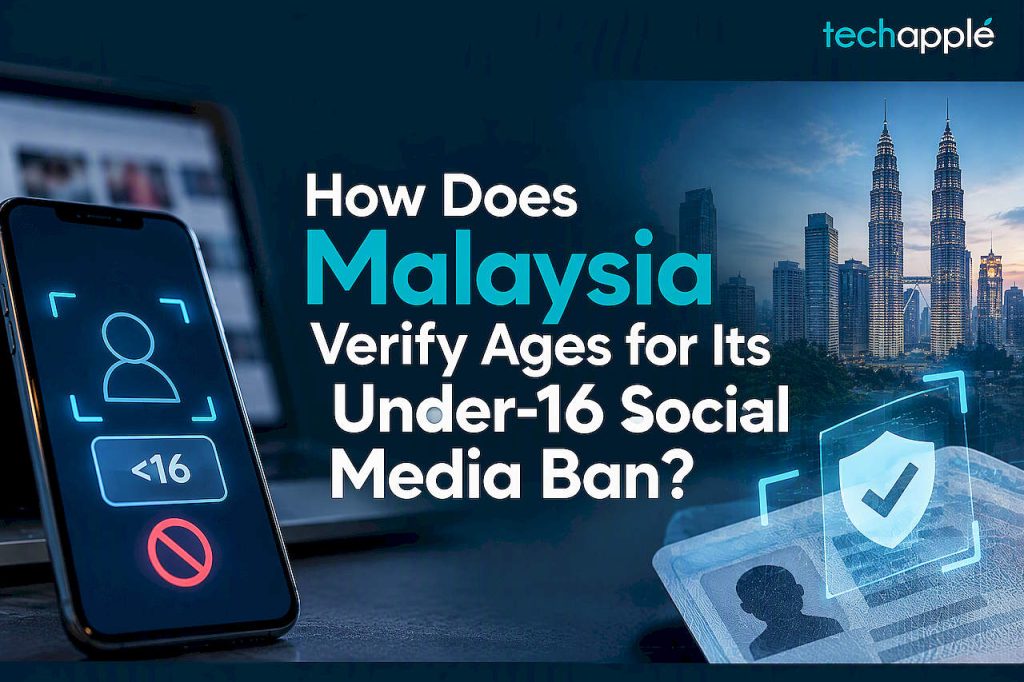
Malaysia has barred children under 16 from registering social media accounts since 1 June 2026, and the Child Protection Code requires platforms to check ages against official records such as MyKad and passports, a design that puts identity data at the centre of the system.
- Under the Child Protection Code, under-16s have not been allowed to register social media accounts in Malaysia since 1 June 2026.
- Platforms must confirm ages using official records including MyKad, passports and potentially MyDigital ID.
- MCMC requested the removal of 470,593 pieces of harmful content between 1 January and 17 August 2026, of which 64% involved online gambling.
- The Soya Cincau analysis argues for privacy-preserving age assurance that confirms a user is 16 or older without exposing identity details.
The rule that took effect
The age limit sits in the Child Protection Code (CPC). Since 1 June 2026, children below 16 may not register social media accounts in Malaysia, and platforms must make sure users meet the minimum age using official records: MyKad, passports, and potentially MyDigital ID.
The stated goal is protection. Children face sexual grooming, harmful content and cyberbullying, while platform designs keep users engaged for as long as possible. Recent violent incidents involving teenagers at schools in Bandar Utama and Banting added urgency to the debate over what young people are exposed to online. The commentary carrying these numbers, published by SoyaCincau on 21 September 2026, stresses that social media cannot be blamed for such incidents without evidence.
How the age check works, and what it costs
To block a 14-year-old, the system must also classify a 21-year-old and a 60-year-old, which is why the requirement reaches adults as well as teenagers. Malaysia describes the mechanism as age verification rather than age assurance, and that distinction matters: a privacy-preserving design could confirm only that a user is 16 or older, without passing a full name, MyKad number, address or date of birth to TikTok, Facebook or Instagram.
The data risk is concrete. Identity and biometric information cannot be reset after a breach the way a password can, and the source notes that four government platforms, including the Ministry of Health, were reportedly hacked in 2026. Once infrastructure for age checks exists, commentators also warn it could later be used for other purposes, such as content restrictions beyond the original goal.
What the enforcement numbers show
Between 1 January and 17 August 2026, the Malaysian Communications and Multimedia Commission (MCMC) requested the removal of 470,593 pieces of harmful content. Scams accounted for 27% and online gambling for 64% of the total. Communications Minister Fahmi Fadzil singled out Facebook, saying it “commits the most sins” against Malaysians on online gambling and scams, and Facebook alone made up 78% of the online gambling content identified for removal.
Results elsewhere, and alternatives
Two reference points appear in the discussion. In the UK, stronger age checks under the Online Safety Act were followed by traffic declines at several adult sites, while Proton VPN reported UK sign-ups up by more than 1,400% shortly after the rules took effect, a reminder that circumvention arrives quickly. Australia’s under-16 restriction has run since December 2025; early reports say account ownership among younger users has fallen, but social media usage has not disappeared.
Lighter-touch options exist at the device and network level. Apple’s Declared Age Range system lets apps receive a child’s age range instead of an exact date of birth, and Tune Talk’s Epik+ Family Safe applies parental controls through the mobile network, so website categories can be restricted without relying only on settings on a child’s phone. Neither replaces regulation, but both follow the same principle: give a service the minimum information it actually needs.
FAQ
What does Malaysia’s under-16 ban require?
Since 1 June 2026, social media platforms may not register users under 16 and must confirm ages against official records such as MyKad and passports under the Child Protection Code.
Why do adults need to care about the age check?
Verifying that one user is under 16 means the system also classifies every older user, so the identity data of adults passes through the same mechanism.
How much harmful content has been removed?
MCMC requested removal of 470,593 pieces between 1 January and 17 August 2026, with 27% scams and 64% online gambling, and Facebook accounting for 78% of gambling content identified.
Do age checks stop teenagers completely?
Proton VPN sign-up numbers and early Australian reports both suggest teenagers can route around account bans, through VPNs, adult accounts or platforms outside the rule’s scope.
Source: Soya Cincau